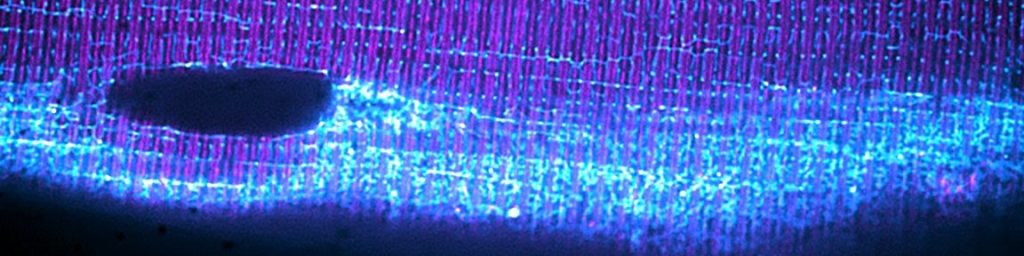
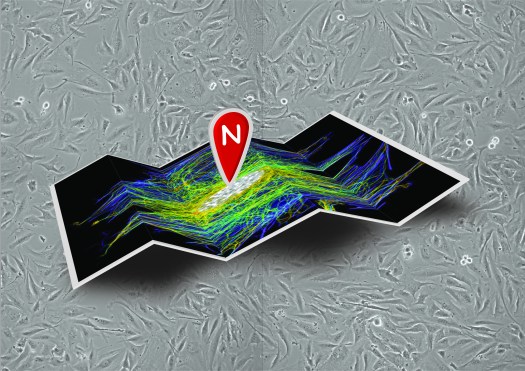
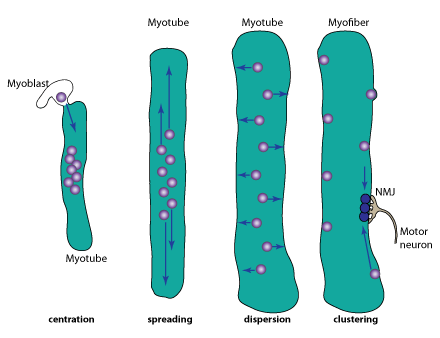
Muscle cells have the particularity of containing hundreds of nuclei, resulting from the fusion of hundreds of myoblasts, that are evenly spaced just under the plasma membrane. To achieve this particular organization, nuclei have to undergo specific and successive types of nuclear movements. Defects in nuclear positioning are hallmarks of several muscular diseases.
The two first movements, centration and spreading, are microtubule-dependent but require different molecular motors and have therefore different characteristics. These movements are thought to rely on a major modification of the microtubule organization: since 1985 it is known that centrosomes, the microtubule organizing centers in the cell, disappear during muscle cell differentiation. The microtubule organization is transfered to the nucleus that recruits some centrosomal proteins and microtubule-nucleation factors. We found that this is achieved by a particular isoform of Nesprin-1, an nuclear envelope-associated protein, expressed during muscle cell differentiation that recruit Akap-450, an anchor for microtubule-nucleators. The nuclear dispersion movement, on the other hand, relies on myofibrils contraction and nuclear envelope modifications.
Muscle contraction is the ultimate feature to undestand if a treatment is working or to know if a mutation affect muscle function. It often relies on animal models difficult and expensive to produce and maintain, but also because we need to find alternatives. We are therefore developing micro-fabricated devices that allow the culture and development of single fibers (here in red) hanged between two silicon pillars (here in green), deformable upon myofibers contractions.

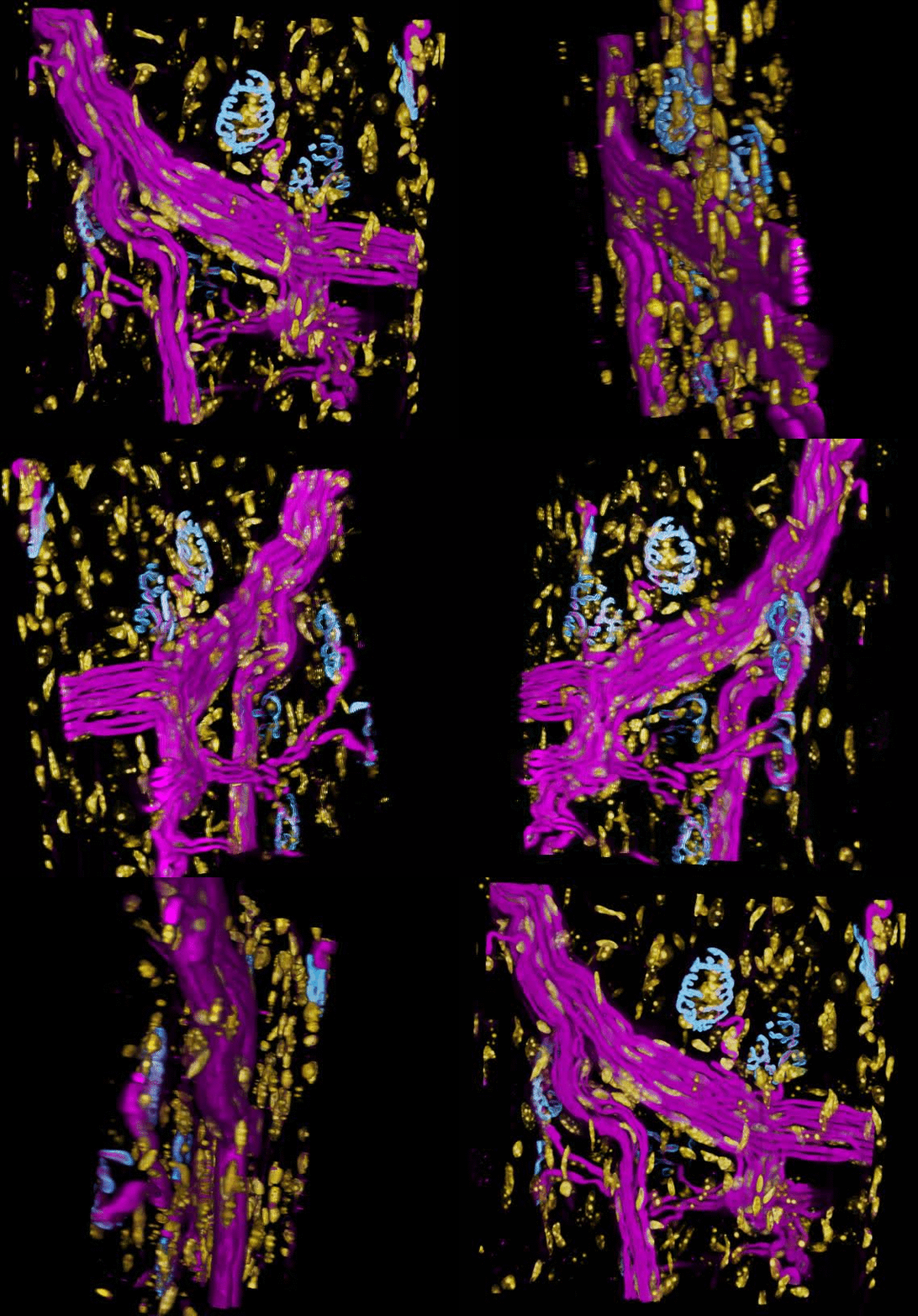
Muscles are one of the unique tissue in humans resisting transplantation, therefore leaving patients, suffering from diseases or having lost a muscle after an accident or an injury, with bad living conditions. We are therefore developing an approach to allow the replacement of muscle tissue.

Check the Muscle Atlas
Do you need advices?
| Muscle Cells | Image acquisition and analysis |
|---|---|
| Extraction | Live imaging |
| Culture | Analysis |
| Differentiation | Tools |
 B. CADOT Research Website